| Psychiatry Research, http://dx.doi.org/10.1016/j.psychres.2013.01.015. |
Deficits in cue detection underlie event-based prospective memory impairment in major depression: an eye tracking study
Siyi Chen a,b,c, RenlaiZhou a,b,c,*, HongCui d, XinyinChen e
a Beijing Key Lab of Applied Experimental Psychology, School of Psychology, Beijing Normal University, Beijing 100875, China
b State Key Laboratory of Cognitive Neuroscience and Learning, Beijing Normal University, Beijing 100875,China
c Research Center of Emotion Regulation, Beijing Normal University, Beijing 100875, China
d Medical Psychology Division, General Hospital of People’s Liberation Army, Beijing 100853, ChinaeApplied Psychology-Human Development Division, Graduate School of Education, University of Pennsylvania 3700, Walnut St., Philadelphia, USA
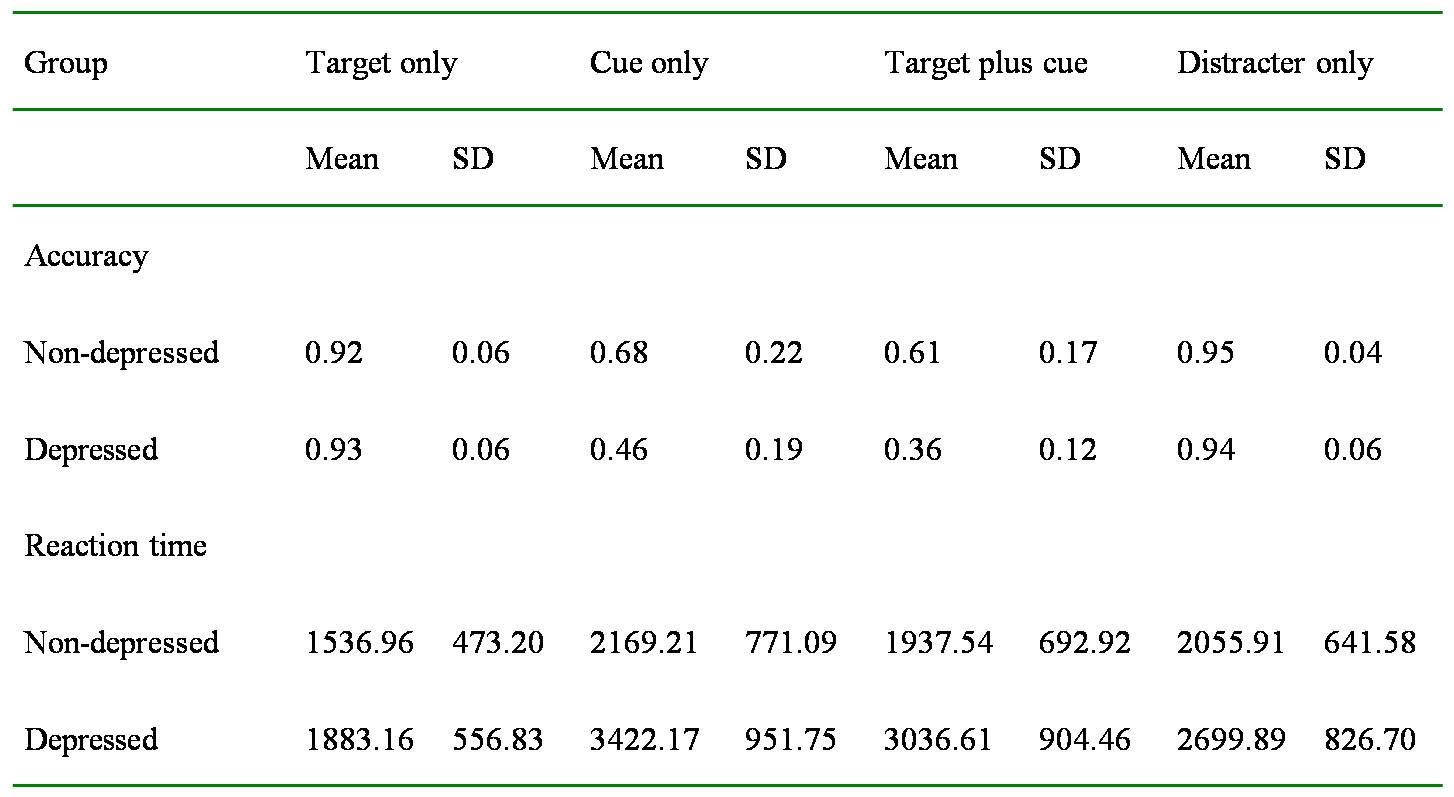
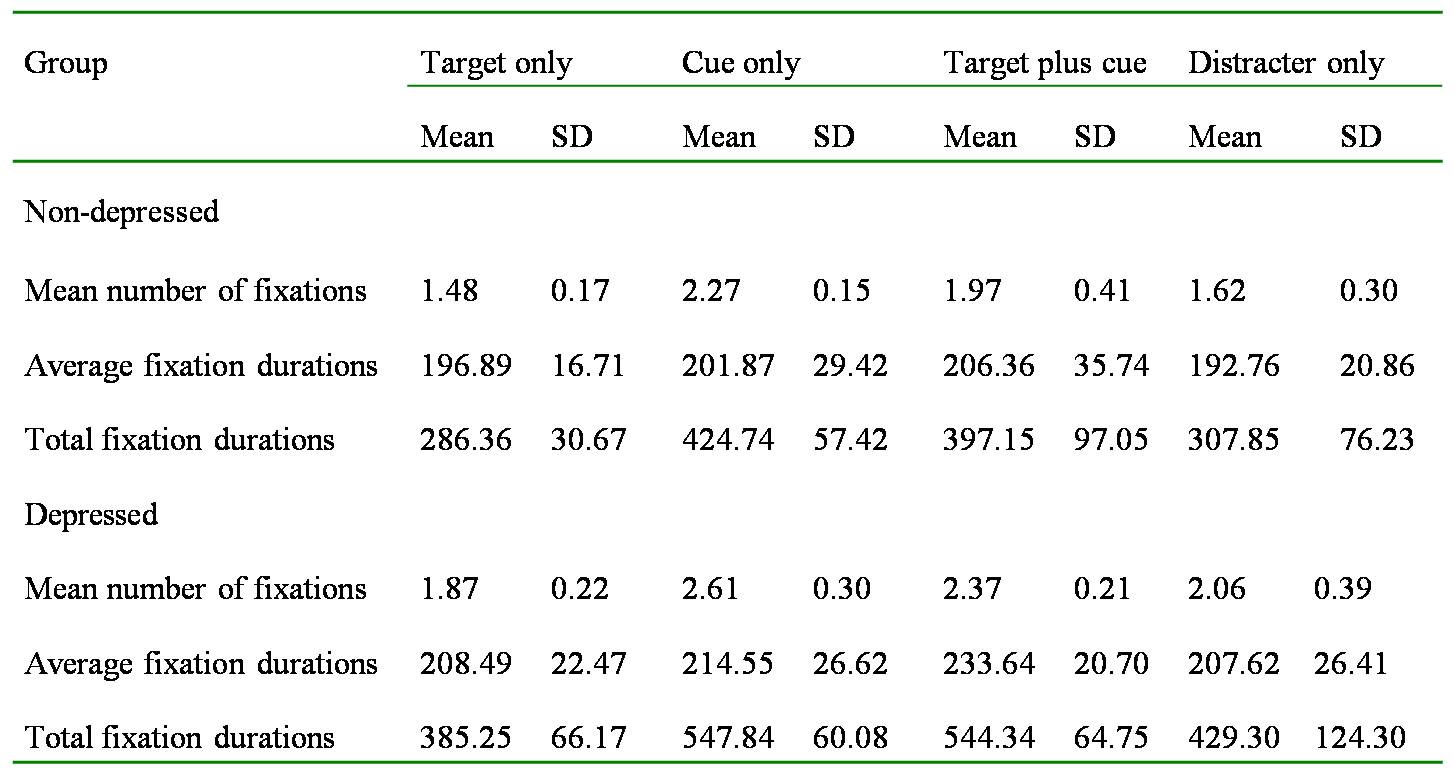
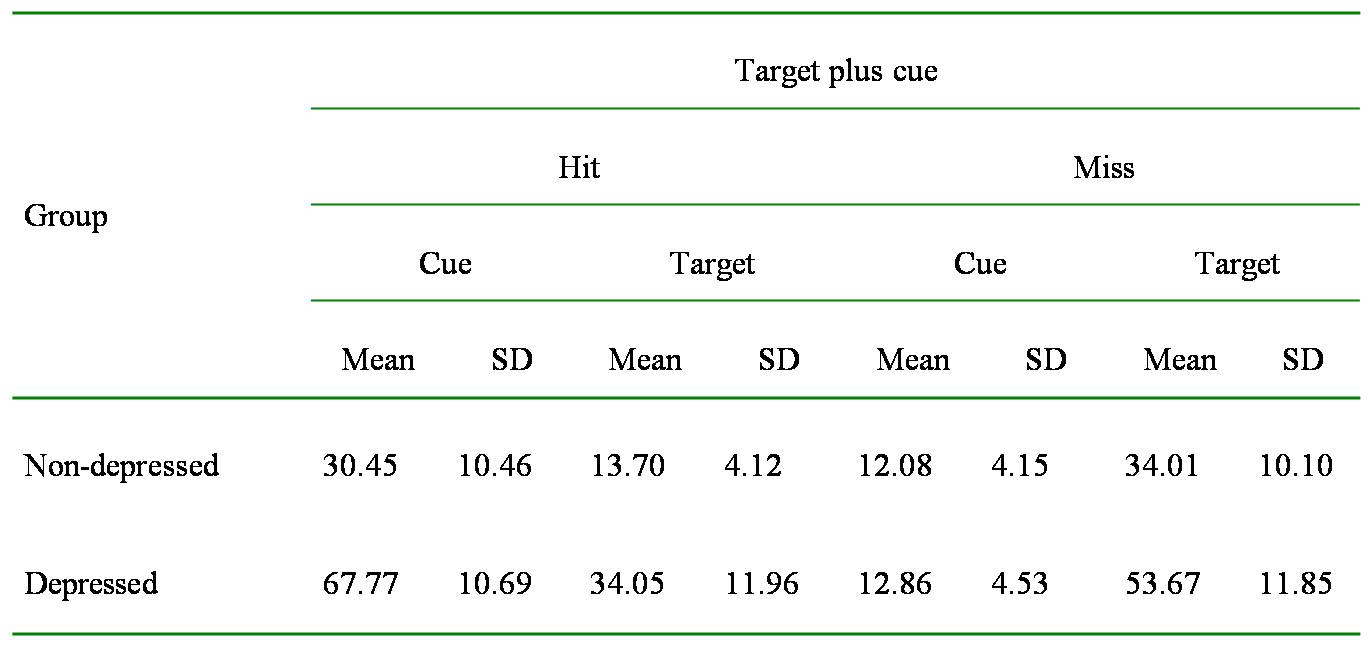
Abstract: This study examined the cue detection in the non-focal event-based prospective memory (PM) of individuals with and without a major depressive disorder using behavioural and eye tracking assessments. The participants were instructed to search on each trial for a different target stimulus that could be present or absent and to make prospective responses to the cue object. PM tasks included cue only and target plus cue, whereas ongoing tasks included target only and distracter only. The results showed that a) participants with depression performed more poorly than those without depression in PM; b) participants with depression showed more fixations and longer total and average fixation durations in both ongoing and PM conditions; c) participants with depression had lower scores on accuracy in target-plus-cue trials than in cue-only trials and had a higher gaze rate of targets on hits and misses in target-plus-cue trials than did those without depression. The results indicate that the state of depression may impair top-down cognitive control function, which in turn results in particular deficits in the engagement of monitoring for PM cues.
Key words: Event-based prospective memory; Cue detection; Major depressive disorder; Eye tracking; Behavioural measurement.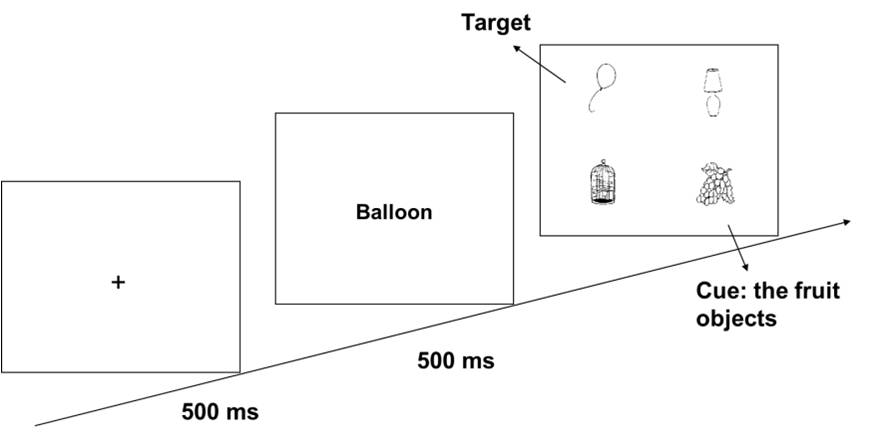
抑郁症患者对线索识别的缺陷导致前瞻记忆功能的损害:一项眼动研究
陈思佚a,b,c周仁来a,b,c,*崔红d陈欣银e
a北京师范大学北京应用试验心理重点实验室北京 100875
b北京师范大学认知神经科学与学习国家重点实验室北京 100875
c北京师范大学情绪调节中心北京 100875
d人民解放军总医院心理精神科北京 100853
e宾夕法利亚大学教育学院应用心理人类发展系费城美国 3700
该研究采用眼动的方法来关注线索觉察和提取以及个体的注意加工程度,从前瞻记忆加工是否受到抑郁症患者本身认知控制能力影响的角度考察前瞻记忆的加工机制。结果发现,单向抑郁症个体由于认知控制功能不足在事件性前瞻记忆任务上表现出损害。抑郁状态也许通过损害自上而下的认知控制功能,导致参与到监控前瞻线索的能力下降,不能有效地分配注意资源到进行中任务和前瞻记忆任务中。本研究可以为临床专业者提供促进前瞻记忆任务表现的建议,帮助前瞻记忆功能损害者实现意向行为,保证独立良好的生活,具有重要的实践意义。


